
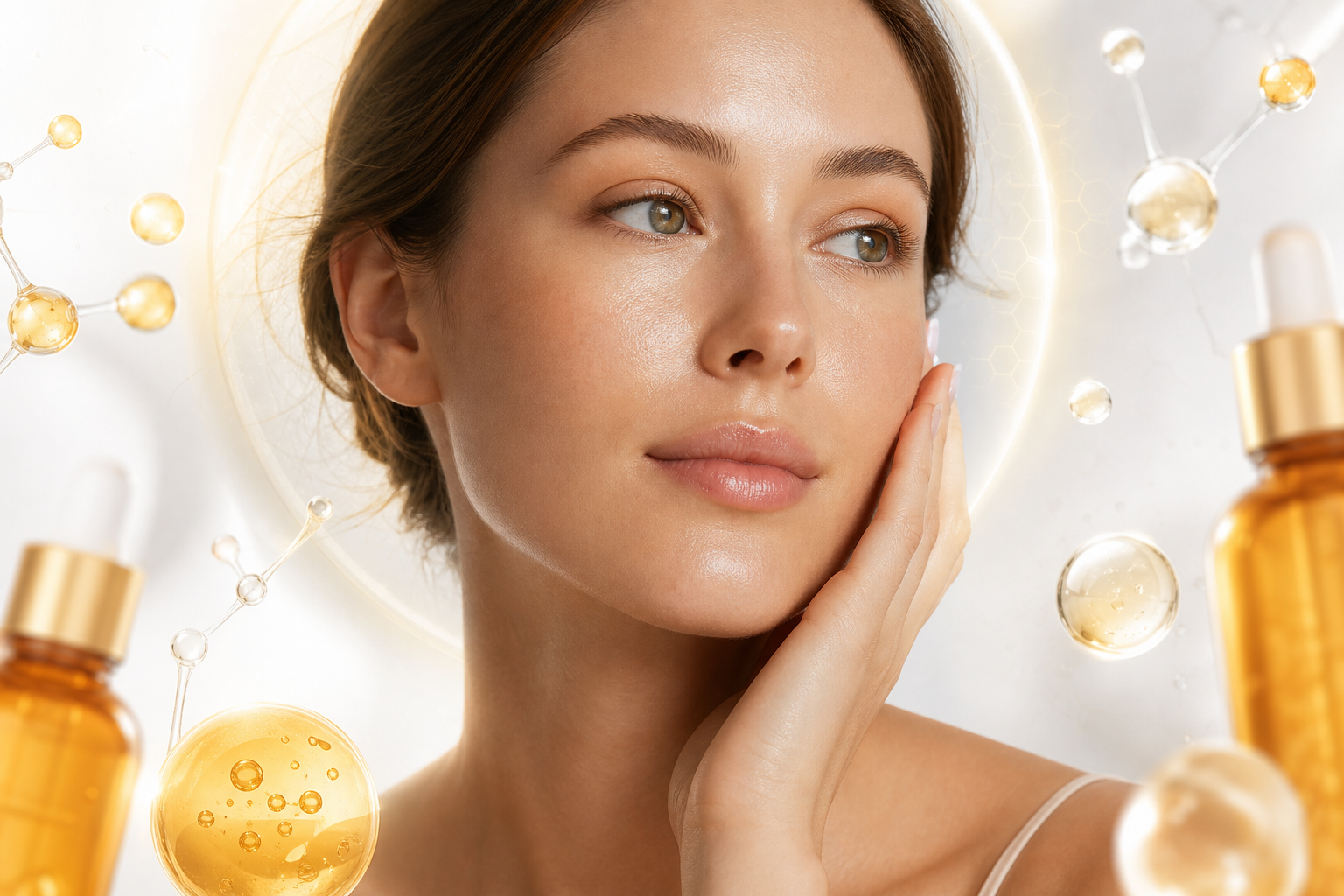
What Is Vitamin C?
Vitamin C is an ingredient that has remained popular in the world of skincare for years. However, recent research suggests that the benefits of this powerful antioxidant for the skin may be even greater than we thought.
First, vitamin C helps prevent premature aging by fighting free radicals. It also supports collagen production, helping the skin stay firmer and more elastic. New studies published in 2024 revealed that regular topical use of Vitamin C significantly increases collagen levels.
But that’s not all: Vitamin C evens out skin tone, reduces the appearance of dark spots, and makes the skin more resistant to UV-induced damage. When used in combination with sunscreen, this effect is further enhanced.
Vitamin C + Ferulic Acid: A Powerful Duo
Clinical studies conducted in recent years have shown that vitamin C becomes much more effective when used with ferulic acid. Ferulic acid not only increases the stability of Vitamin C but also boosts its antioxidant effect by up to three times. This combination offers stronger protection, particularly against UV-induced skin aging.
In conclusion, the latest research recommends incorporating Vitamin C and ferulic acid into your skincare routine to achieve a healthy and radiant complexion.
References:
1. Pullar, J. M., Carr, A. C., & Vissers, M. C. (2024). The roles of vitamin C in skin health. Nutrients, 16(1), 112. https://doi.org/10.3390/nu16010112
2. Zasada, M., et al. (2023). The influence of topical vitamin C on collagen synthesis: A randomized clinical trial. Journal of Cosmetic Dermatology, 22(9), 2033–2040.
3. Campos, P. M., et al. (2024). Effectiveness of vitamin C and its combinations on skin pigmentation: A comparative study. Dermatologic Therapy, 37(1), e15821.
4. Lin, J. Y., et al. (2023). Ferulic acid stabilizes vitamin C formulations and enhances photoprotection. International Journal of Dermatology, 62(4), 456–462.
5. Pinnell, S. R., et al. (2001). Topical L-ascorbic acid: Enhanced photoprotection through a combination of antioxidant ingredients. Journal of Investigative Dermatology, 116(5), 853–857. https://doi.org/10.1046/j.0022-202x.2001.01362.x