What Is NAD?
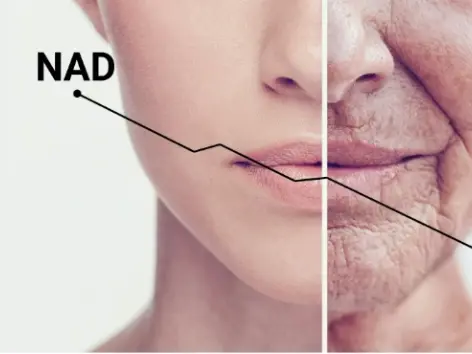
NAD (Nicotinamide Adenine Dinucleotide) is an essential coenzyme found in all living cells that plays a role in critical processes such as metabolic energy production, DNA repair, and cellular aging. As we age, the body’s NAD levels decline, which is associated with reduced energy, a slowdown in cellular repair mechanisms, and signs of aging. For this reason, NAD supplements (NAD+, NADH, NMN, NR, etc.) have become a focus of research and interest in recent years.
NAD Supplements and Why They Matter
Supports Energy Metabolism.
NAD⁺ is essential for cellular energy production.
Declining NAD levels are associated with symptoms of low energy, such as fatigue and loss of muscle strength.
Cellular Aging and DNA Repair
NAD activates sirtuin enzymes (SIRT1, etc.). Sirtuins are proteins that slow cellular aging and facilitate DNA repair. Adequate NAD levels may help extend cell lifespan and contribute to healthy aging.
Brain and Nervous System
Brain tissue has high energy requirements, and NAD deficiency can negatively affect nerve cells.
Some studies have shown that NAD supplementation may play a supportive role in neurodegenerative diseases (at the experimental level).
Metabolic and Cardiovascular Support
NAD⁺ levels may have a positive effect on insulin sensitivity, fat burning, and cardiovascular health.
While research is ongoing, the role of NAD in preserving heart muscle function is also being investigated.
Other Effects
Research is ongoing into a wide range of processes, from reducing inflammation to cellular stress responses.
The goal of supplementation with NAD⁺ precursors is to replenish NAD⁺ levels, which decline over time and with age. Human studies suggest that supplementation with NAD+ precursors—which our cells use to produce NAD+ (such as NR, NMN, or its reduced form, NADH)—increases NAD+ levels and may help counteract the cellular mechanisms of aging.
References:
Alegre GFS, Pastore GM. NAD+ Precursors Nicotinamide Mononucleotide (NMN) and Nicotinamide Riboside (NR): Potential Dietary Contribution to Health. Curr Nutr Rep. 2023 Sep;12(3):445-464. doi: 10.1007/s13668-023-00475-y. Epub 2023 Jun 5. PMID: 37273100; PMCID: PMC10240123.
Massudi H, Grant R, Braidy N, Guest J, Farnsworth B, Guillemin GJ. Age-associated changes in oxidative stress and NAD+ metabolism in human tissue. PLoS One. 2012;7(7):e42357. doi: 10.1371/journal.pone.0042357. Epub 2012 Jul 27. PMID: 22848760; PMCID: PMC3407129.
Martens CR, Denman BA, Mazzo MR, Armstrong ML, Reisdorph N, McQueen MB, Chonchol M, Seals DR. Chronic nicotinamide riboside supplementation is well-tolerated and elevates NAD+ in healthy middle-aged and older adults. Nat Commun. March 29, 2018;9(1):1286. doi: 10.1038/s41467-018-03421-7. PMID: 29599478; PMCID: PMC5876407.
Strømland Ø, Diab J, Ferrario E, Sverkeli LJ, Ziegler M. The balance between NAD+ biosynthesis and consumption in aging. Mech Ageing Dev. Oct 2021;199:111569. doi: 10.1016/j.mad.2021.111569. Epub 2021 Sep 9. PMID: 34509469.
Katsyuba E, Romani M, Hofer D, Auwerx J. NAD+ homeostasis in health and disease. Nat Metab. 2020 Jan;2(1):9-31. doi: 10.1038/s42255-019-0161-5. Epub 2020 Jan 20. PMID: 32694684.