Urolithin A, one of the molecules that has garnered significant attention in recent years in the field of healthy aging (longevity) research, has captured the scientific community’s interest due to its effects on the quality of mitochondria—the energy centers of cells.
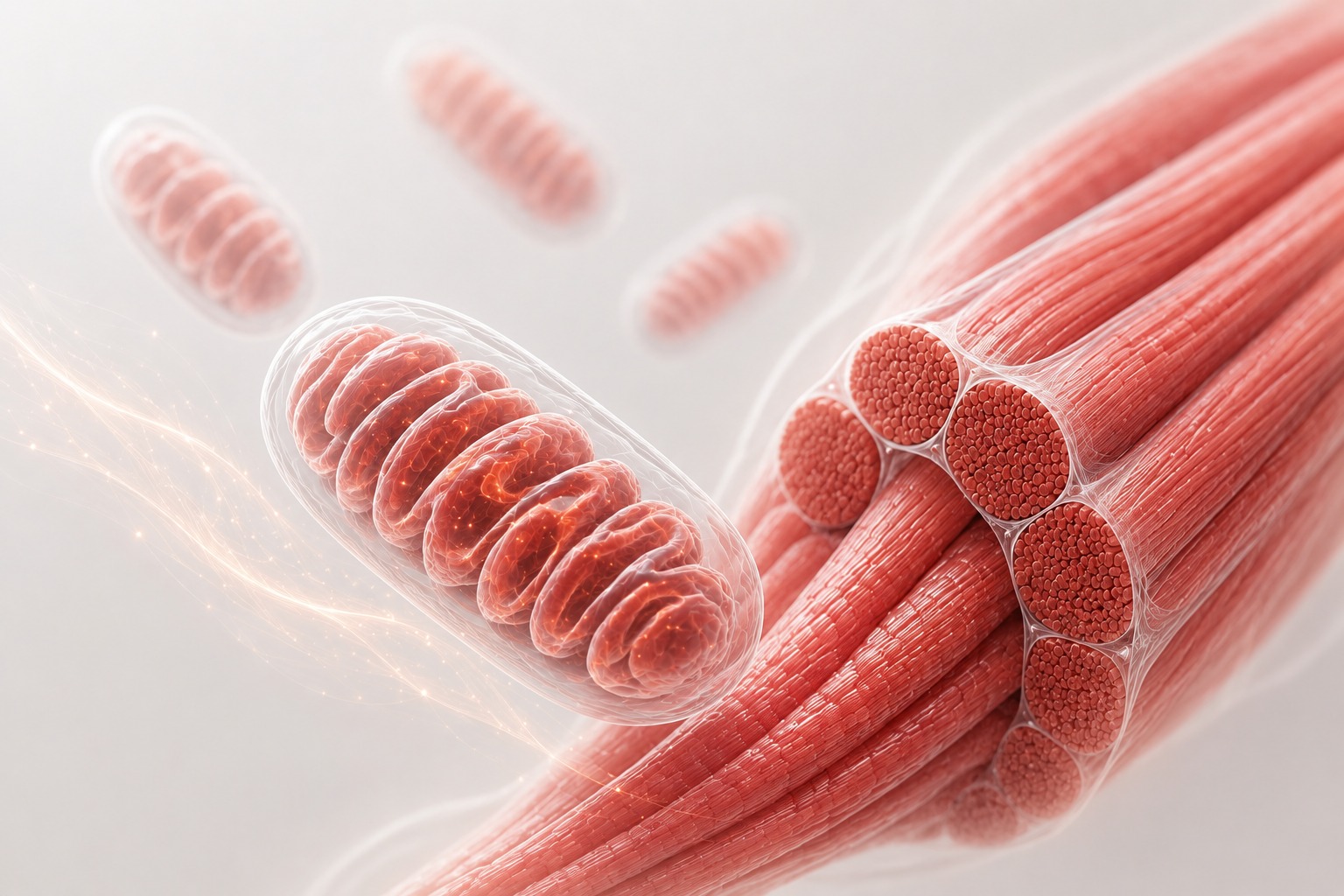
As we age, natural changes occur in the function of the mitochondria in our cells, which are responsible for energy production. Cells use a natural cellular recycling mechanism called mitophagy to remove dysfunctional mitochondria and ensure the survival of healthier ones.
What is Urolithin A?
Urolithin A is a natural metabolite formed through the conversion of ellagitannins—found in pomegranates, walnuts, and certain fruits—by the gut microbiota. However, due to differences in the gut microbiota among individuals, this conversion may not always occur to the same extent.
Urolithin A is currently emerging as an innovative compound that is being directly studied in research on cellular energy metabolism and healthy aging.
Mitophagy: A natural mechanism of cellular renewal
Mitophagy is a natural quality control process in which cells recognize and remove damaged or dysfunctional mitochondria.
In the field of longevity science, mitochondrial quality is of great importance. This is because healthy mitochondria play a critical role in maintaining the energy-producing capacity of cells.
Scientific research indicates that Urolithin A may support mitophagy processes associated with mitochondrial quality control mechanisms and may have effects on cellular energy metabolism that are worth investigating.
The Relationship Between Urolithin A and Muscle Strength
Muscle tissue is one of the tissues in our body with the highest energy requirements, and mitochondrial health plays a key role in maintaining muscle function.
Clinical studies conducted with middle-aged adults have investigated the effects of urolithin A on biomarkers associated with muscle performance, endurance, and mitochondrial health.
These studies demonstrate that Urolithin A is an important molecule for future research, particularly in the fields of muscle strength, physical performance, and the biology of healthy aging.
The Role of Urolithin A in Longevity Science
Today, research on longevity aims not only to increase life expectancy but also to extend the duration of a healthy and active life.
In this approach, mitochondrial function, cellular energy balance, and natural renewal mechanisms are key areas of research. Urolithin A is also considered one of the next-generation compounds in this field, focusing on mitochondrial biology and cellular quality control processes.
Scientific References
- Ryu D, et al. Urolithin A induces mitophagy and prolongs lifespan in C. elegans and increases muscle function in rodents. Nature Medicine. 2016;22:879–888. DOI: 10.1038/nm.4132
- Andreux PA, et al. The mitophagy activator urolithin A is safe and induces a molecular signature of improved mitochondrial and cellular health in humans. Nature Metabolism. 2019;1:595–603. DOI: 10.1038/s42255-019-0073-4
- Singh A, et al. Urolithin A improves muscle strength, exercise performance, and biomarkers of mitochondrial health in a randomized trial in middle-aged adults. Cell Reports Medicine. 2022;3(5):100633. DOI: 10.1016/j.xcrm.2022.100633